
Tummy Time, Reimagined:
The missing link between body tension, tummy time, posture, and feeding.
Tummy time is about so much more than building neck strength.
It is where your baby learns to organize their body against gravity, develop postural stability, and build the movement patterns that support everything from breastfeeding to reaching and rolling and beyond!
If your baby...
cries the moment you put them on their tummy
arches or stiffens during tummy time
always looks to one side
pushes themselves backward instead of lifting their head
seems uncomfortable no matter what you try
this course will show you why—and what to do about it.
Because tummy time isn't just an exercise.
It's your baby's first opportunity to learn how to move against gravity.
And if their body is working against them because of tension or compensation, tummy time often becomes frustrating instead of productive.
Inside Tummy Time, Reimagined, you will learn:
✓ Simple tips to improve a head turn preference
✓ Gentle bodywork techniques to help your baby move more comfortably (Newly Added!)
✓ Positioning strategies that make tummy time easier and less frustrating
✓ How to encourage head lifting without forcing it
✓ What normal movement looks like—and when compensation is getting in the way
✓ How tummy time improves posture for breastfeeding and bottle feeding
✓ Simple ways to help your baby build strength through movement instead of tension
Every successful feed begins with a stable body. When babies can comfortably lift, rotate, and organize themselves against gravity during tummy time, they're also building the postural control needed for efficient sucking, swallowing, and breathing. When babies move better, they often feed better, too.
Bodywork creates the opportunity for better movement—but it is what your baby does with that new movement that creates lasting change.
That's why this course goes beyond bodywork techniques.
You'll learn how to support tummy time, posture, and feeding in ways that reinforce healthy movement patterns instead of compensations.
See how this whole-body approach changed the game for the mothers below.
This course is best suited for newborns through the pre-crawling stage.
From Our Clients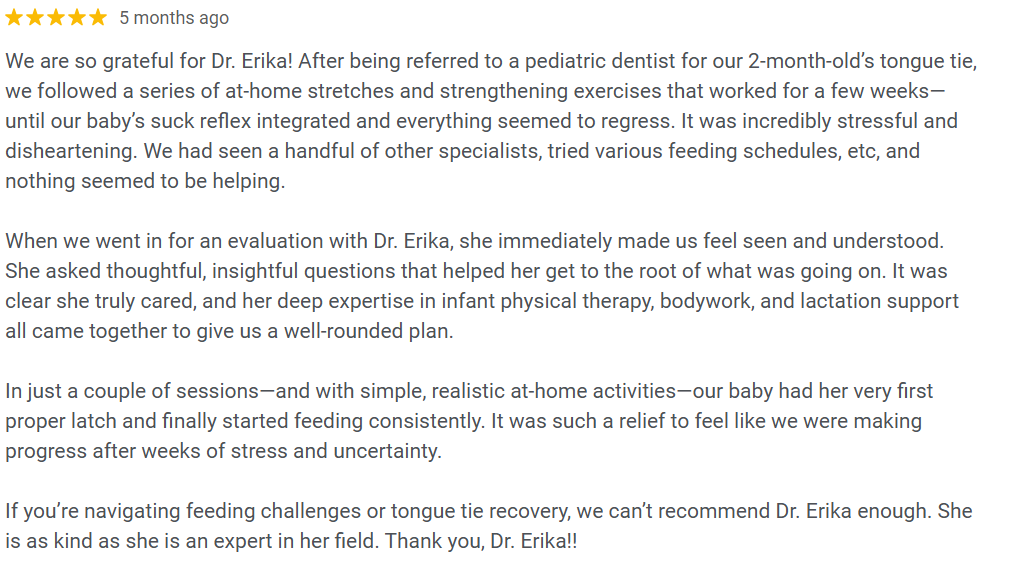
“Our baby had her very first proper latch and finally started feeding consistently.”
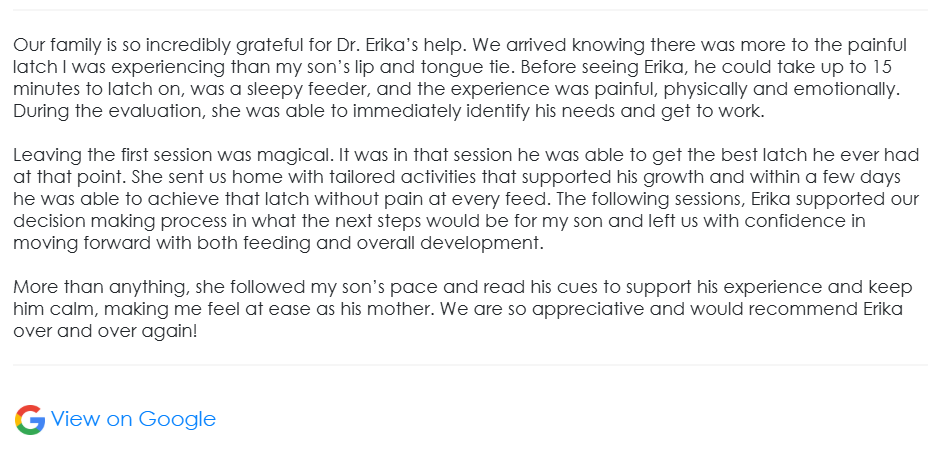
“Within a few days he was able to achieve a latch without pain at every feed.”
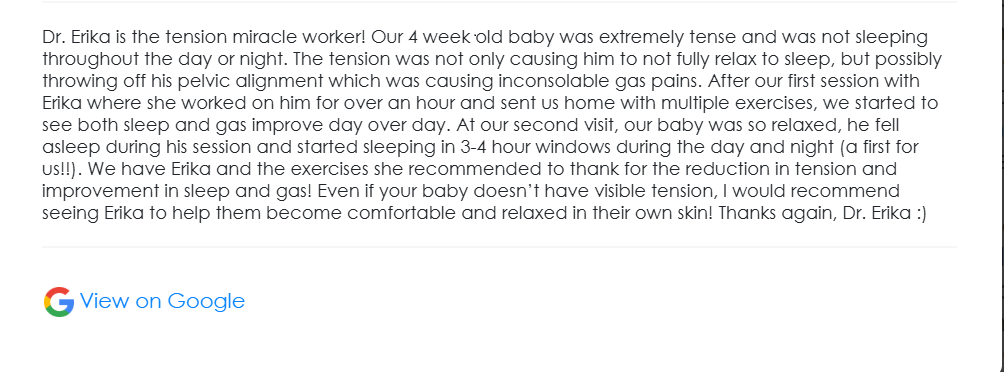
“Our baby was so relaxed, he started sleeping in 3-4 hour windows during the day and night.”
Stop Guessing. Start Feeding.
You don’t need another random Instagram tip. You need a complete system to address posture & tension, latch mechanics, and suck coordination together.
Bundle and Save: All 3 for $97
Feeding Foundations: A Whole Body Approach
Included: Deep Latch Guide + Suck Training & Massage Method + Tummy Time, Reimagined
Note: You will be asked to create a secure login on the next screen before completing your purchase.
Medical Disclaimer: This course was designed for medically stable infants and provides general education only. This course is NOT intended for significantly premature infants, infants currently in the NICU, babies requiring feeding tubes, infants with medically complex conditions, babies with unstable breathing and/or diagnosed swallowing disorders. If you are unsure whether this course is appropriate for your infant, or have questions about their care, please consult your pediatrician or individualized medical team before preceeding.
Meet the Instructor

Hi, I’m Erika!
I'm a Pediatric Physical Therapist, Certified Lactation Counselor, Craniosacral Fascial Therapist, and mom of two. I'm also the owner of Mastering Milestones, a pediatric therapy clinic in Charleston, South Carolina.
Every day, I help babies whose feeding, comfort, and movement challenges are connected in ways that are often overlooked. Through my work, I've seen firsthand that tummy time isn't just about preparing for future milestones—it can influence posture, mobility, regulation, and the foundation for feeding right now.
I created this guide to help parents understand why tummy time matters and how to use it intentionally. My goal is to give you practical, gentle, evidence-informed strategies you can confidently use at home—without fear-based messaging, unnecessary pressure, or "perfect parenting."
I hope this course helps you feel empowered to support your baby's movement, feeding, and development with confidence, one tummy time session at a time.
*This course is for educational purposes only and does not constitute medical advice, physical therapy, or lactation treatment. Participation does not establish a provider–patient relationship. Always consult a licensed healthcare provider for individualized concerns.